Your mentors mark up the thesis itself.
For low-residency and online MFA programs, continuing-studies certificates, and private writing schools. A student’s book stays in one manuscript all term, mentors answer packets on its typeset pages, and the student chooses which changes to keep.
Book a 20-minute walkthrough What it costs
One packet, sent and answered
Here is one packet exchange in a semester. Ashby Hill College and its low-residency MFA are invented, and so is everyone below. Theo Marsh is in his third semester, revising a novel called The Ferry at Kell for his thesis. His mentor this term is Ruth Amsel, who will read five packets from him before the term ends in December. Dana Whitcombe coordinates the program and set up its team account.
Theo brings the novel in once.
Two semesters of the book live in a Word file on Theo’s laptop. He imports it, and it arrives in chapters, already set on the page the way a bound copy would be. Then he moves it into the program’s account. Each packet he sends this term is a stretch of that one manuscript, so nobody keeps a folder of attachments named for the week they went out, and nobody has to work out which of them Ruth marked up last.
A thesis has to be a book by the end. Theo can see its title page and chapter openings from the first week, and how many pages it runs to, long before the month it’s due.
Bring in a manuscript you already have

He invites Ruth for this term only.
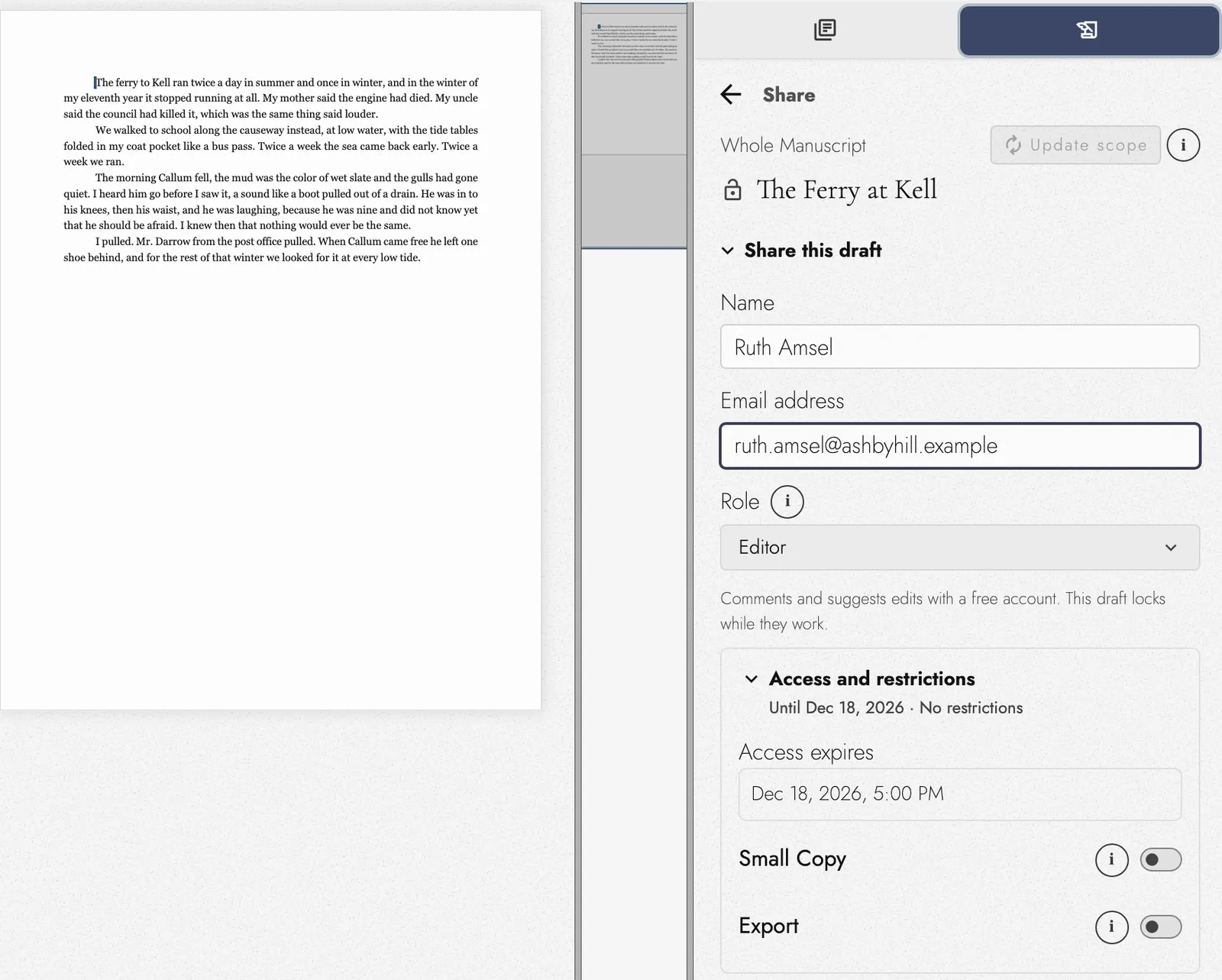
Theo invites Ruth by name and email address, with the Editor role. She needs no paid plan. She accepts, signs up at no cost under the address he invited, and his novel opens in her browser.
Mentors change from one semester to the next, so the invitation carries an end date, the last day of term. When it passes, Ruth’s access closes by itself, along with any review she hasn’t sent back, and next term’s mentor gets an invitation of their own.
Set up a review invitation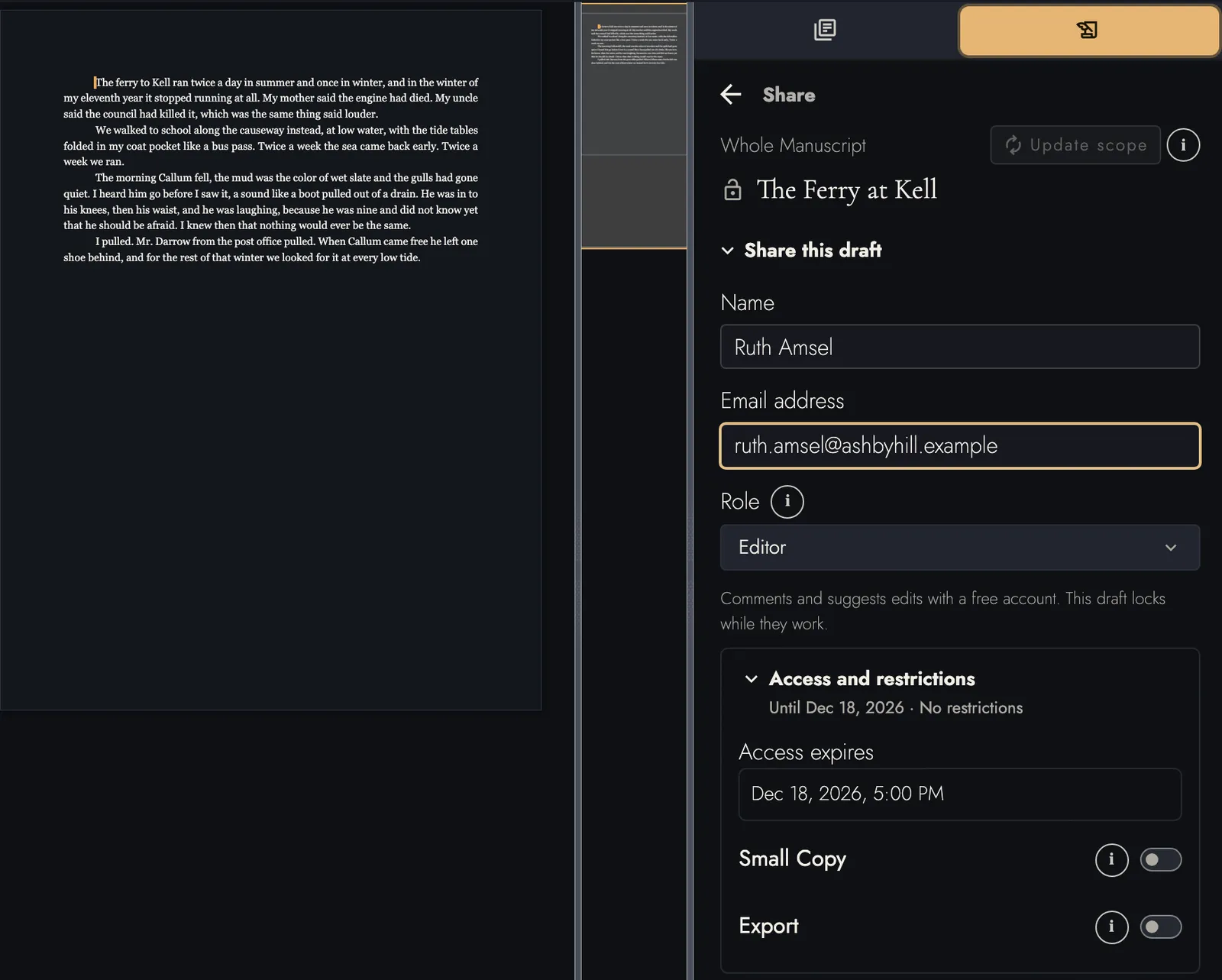
Ruth answers the packet on the page.
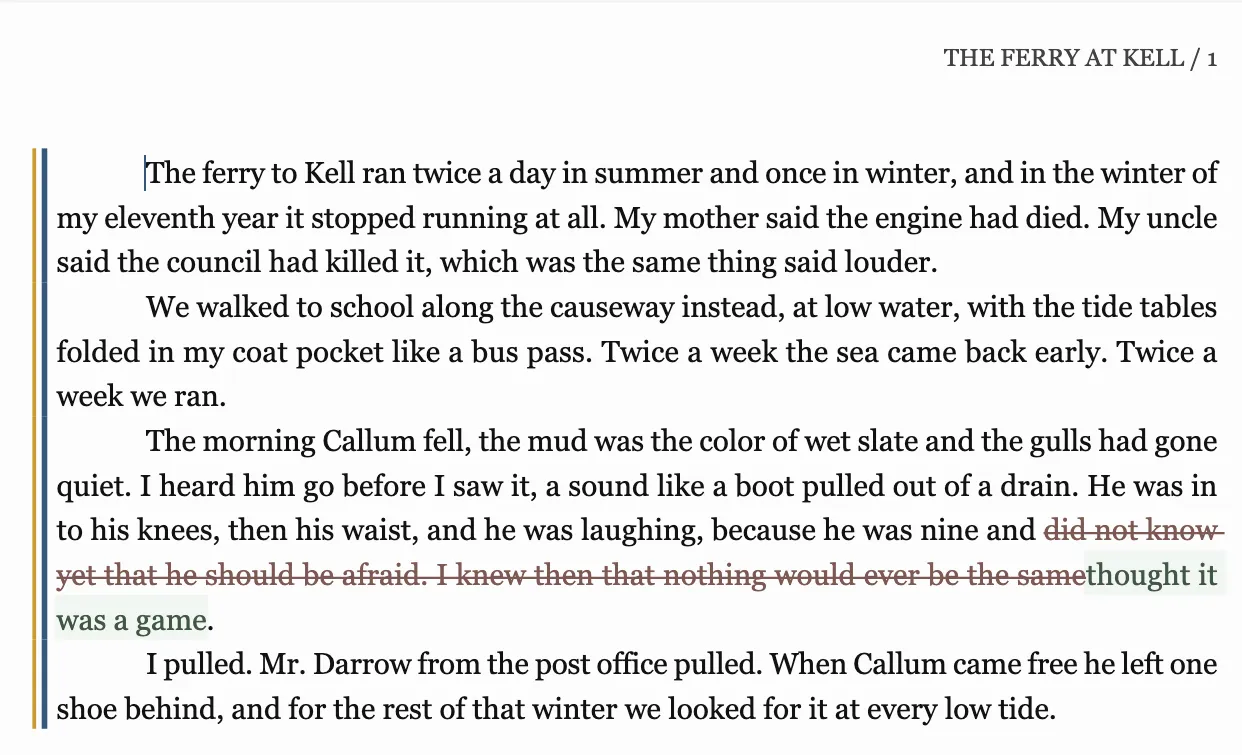
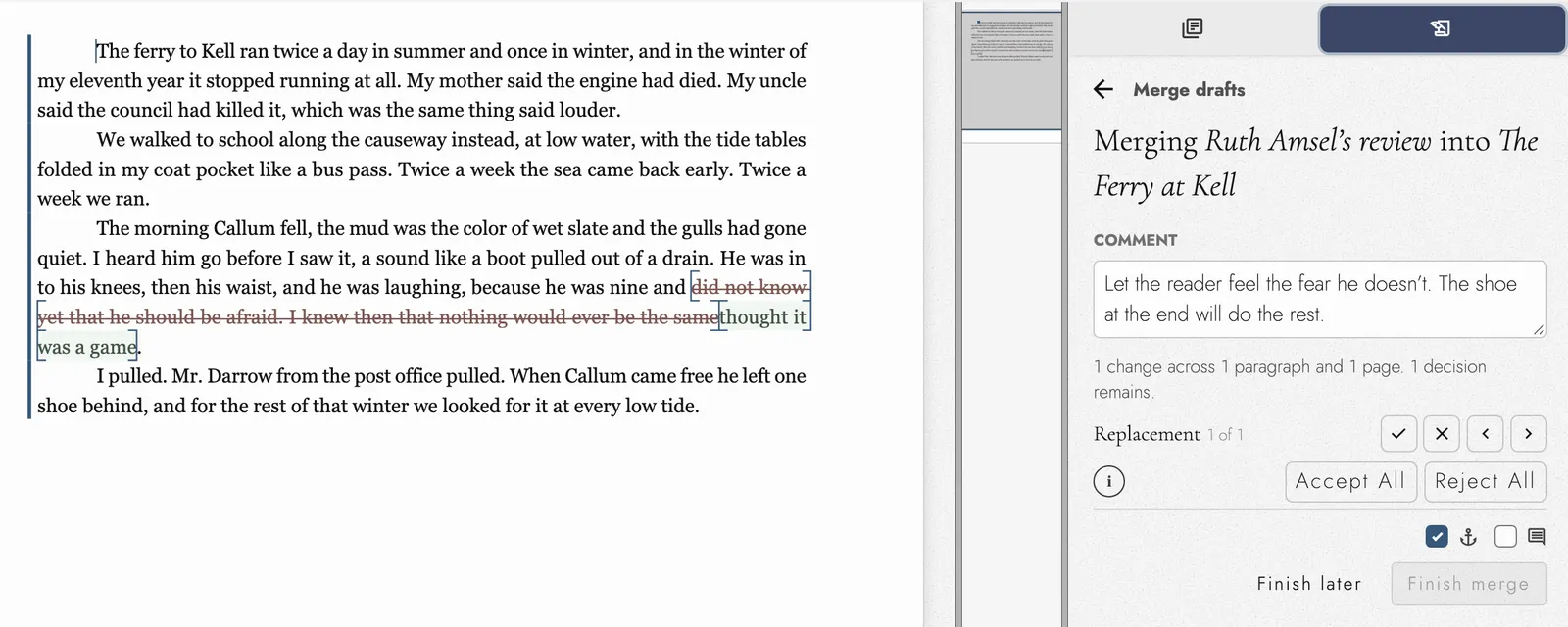
This packet opens on the morning Callum goes into the mud. Theo ends the paragraph by explaining why the boy laughed and then telling the reader what it all meant. Ruth strikes both and types five plain words in their place.
She works in a copy of her own, so the manuscript stays exactly the way Theo left it until he decides. Her letter about the packet as a whole can still go out the way it always has. The line notes, the part that used to crowd a Word file’s margin, come back as changes he can act on.
See a review in Markup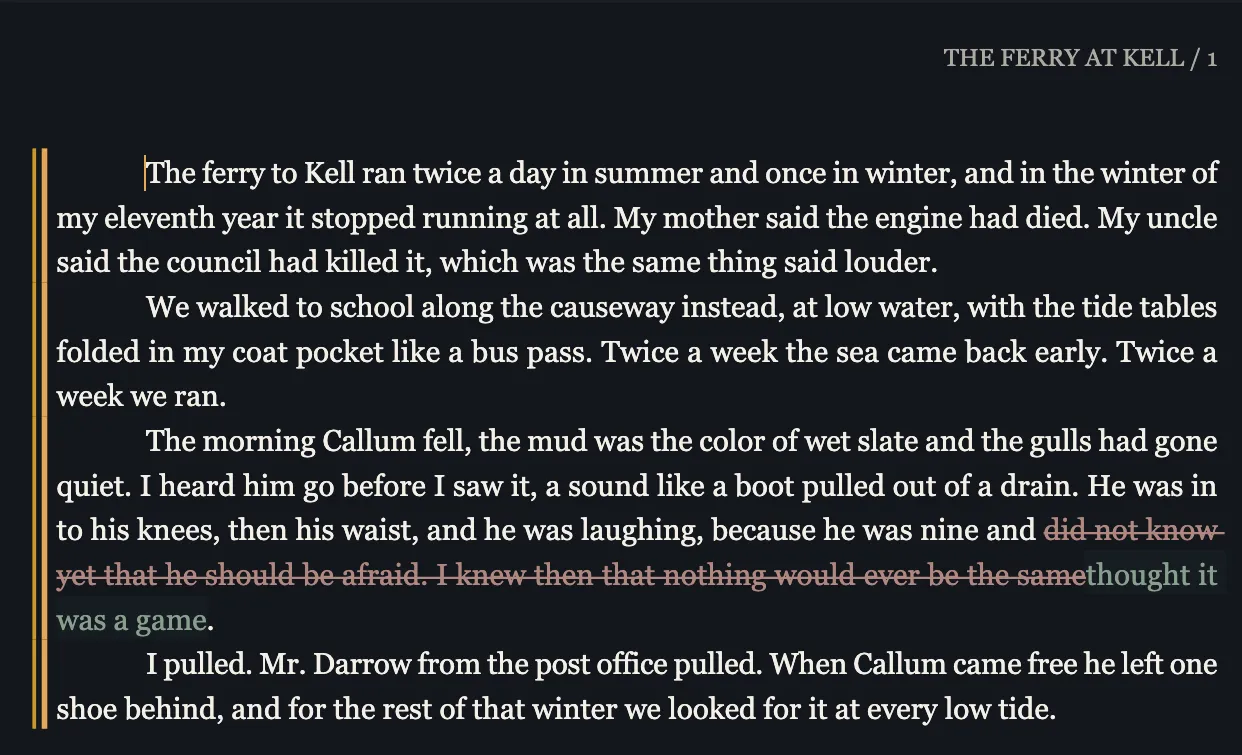
Theo keeps what he agrees with.
Ruth’s review is waiting the next time Theo opens the book, her change marked on his own page. He could turn it down. It’s his thesis, and he decides what goes in it. He reads the paragraph both ways and takes her version.
An eight-week term has no slack. Copying a mentor’s notes into a second file would eat days of it. Here the revision starts the evening the review comes back, in the same manuscript his next packet will come from.
Work through a returned review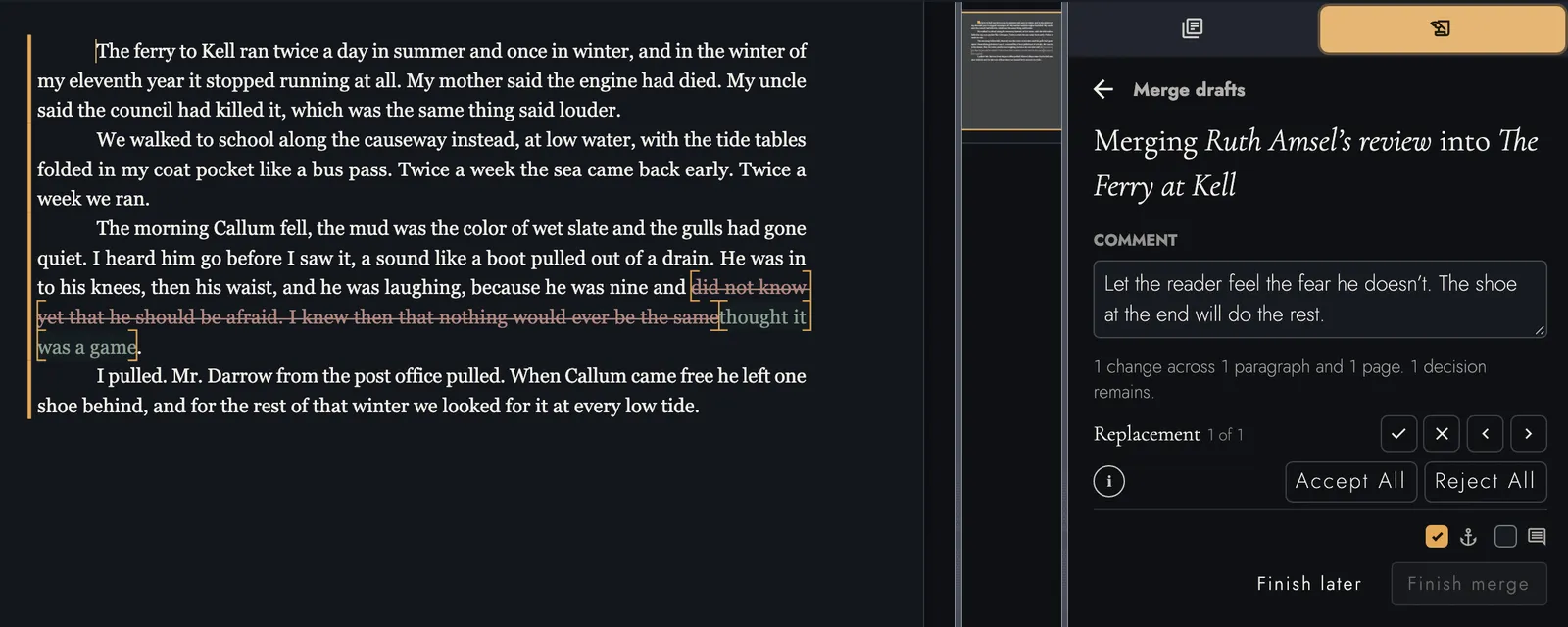
A cohort of books, each on its own calendar
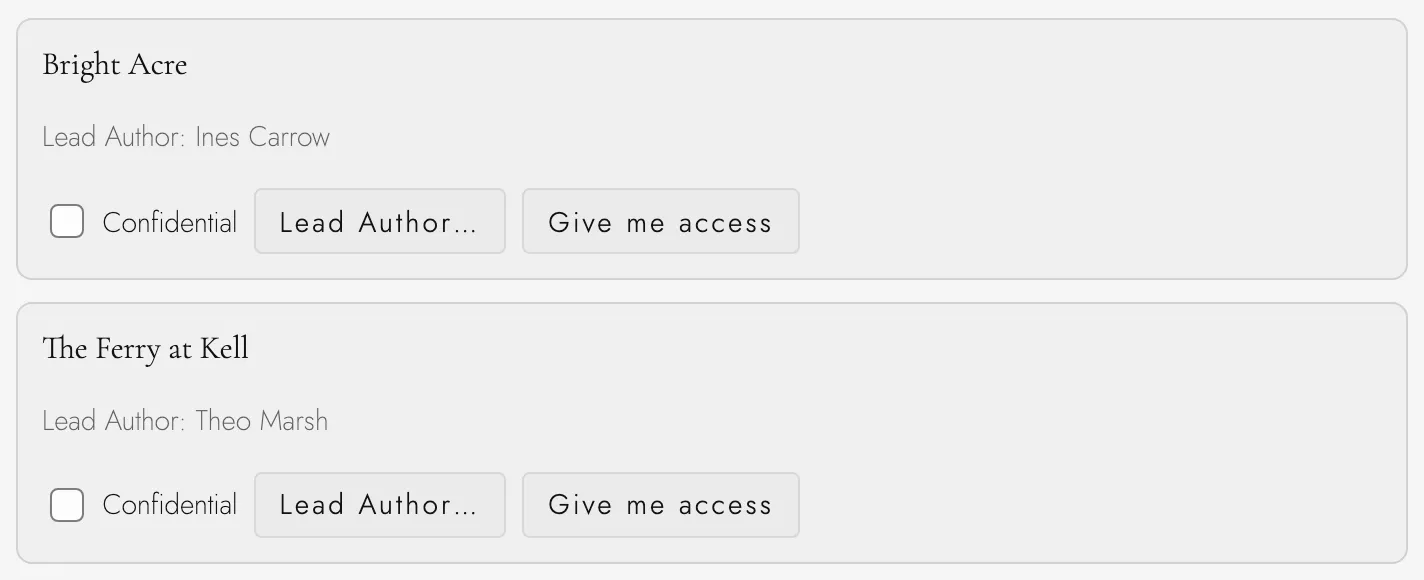
Every thesis is its own manuscript in the program’s account, with its student named Lead Author. Students start in different terms and finish in different years. A mentor’s invitation ends with the term while the book carries on, and the next mentor opens the same manuscript, with its earlier versions kept in snapshots.
Belonging to the program doesn’t open one student’s book to the rest. Dana can put a cohort, or the faculty, in a Group and give the whole Group a book in one step. The team’s audit history shows who was given access, and when.
Questions you’ll have
Who keeps the thesis after the student graduates?
Here is how it works today, and what is still open. A manuscript your program’s team owns stays with the team, and it can’t be moved back to a student’s personal account. A copy can be exported to Word, PDF, or EPUB at any point. What a graduate takes with them, and on what terms, isn’t settled yet, and I would rather work it out with you during the pilot than promise something here. What export produces.
Do you have FERPA documentation or a VPAT?
Not yet, and Tabularia doesn’t connect to your learning management system either. If your IT or accessibility office will want those documents before a pilot, tell me early and I’ll say plainly where each one stands. Student work is encrypted in transit and at rest, and Tabularia neither sells manuscripts nor trains AI models on anyone’s writing.
Do mentors need seats?
No. A mentor who reviews by invitation joins free and never takes a seat. Seats go to the people who write in the program’s account, usually the students, because only someone on the team with write access can accept a mentor’s change.
Does it work for screenwriting students?
Yes. A script is laid out on the exact screenplay grid, a minute a page, and it comes in or goes out as a Fountain or Final Draft file. A screenwriting mentor reviews a scene the same way Ruth reviewed Theo’s chapter.
A pilot first, then seats
I’m Allen, and I built Tabularia. I set up each team by hand. Choose one mentor and the students they’re reading this term and we’ll run it in Tabularia together for 14 days, at no charge, with the people who already work on it.
After the pilot, a seat is $35 a month on a yearly plan or $40 month to month, from 3 seats. Seats are for the people who write and edit. A client, an author, or any other outside reviewer joins as a guest and pays nothing.
Book a 20-minute walkthrough How team accounts work Every plan and price