Your client reads the book, not a Word file.
For ghostwriting firms, memoir studios, and executive-book studios. The manuscript belongs to your firm, every reviewer marks up the typeset page, and your writer decides what goes in.
Book a 20-minute walkthrough What it costs
One chapter, from draft to sign-off
Here is one chapter moving through a firm. Fernhollow Books is an invented ghostwriting studio and The Kiln Years an invented memoir; everyone named below is made up as well. Tess Calloway is writing the book for Helen Varga, who founded a stoneware company and wants her story told before she retires. Helen reads every chapter. So does Marcus Odell, who runs her communications.
Start from the draft Tess already has.
Tess wrote the first chapter in Word, working from Helen’s interview transcripts. She imports the file into the firm’s account, and its chapters and paragraphs arrive as a book. She puts Helen’s name on the title page, where a ghostwriter’s name never goes.
Typesetting isn’t a stage that waits at the end. The page Helen will read next week is already set the way the bound copy will be, chapter openings and all, so nobody finds out in month eight that the book looks wrong.
Import a Word manuscript
Send the chapter to Helen, with limits on it.
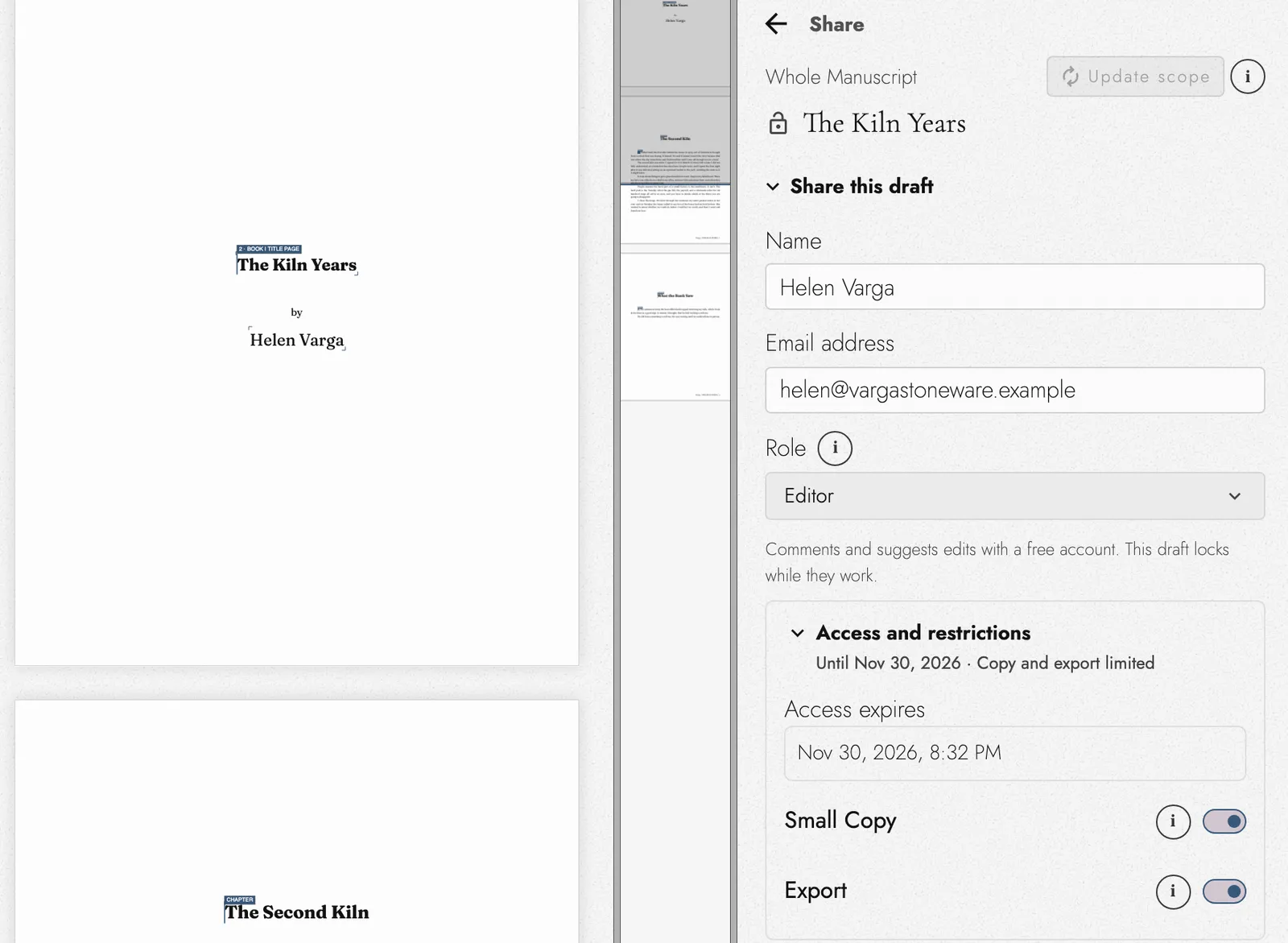
Tess invites Helen by name and address, as an Editor. Helen buys nothing and installs nothing. She accepts, makes a free account with the address Tess used, and the chapter opens in her browser.
A founder’s unpublished memoir is worth guarding. This invitation ends on a date, lets Helen copy no more than three paragraphs at once, and switches export off. Marcus gets an invitation of his own.
Invite a reviewer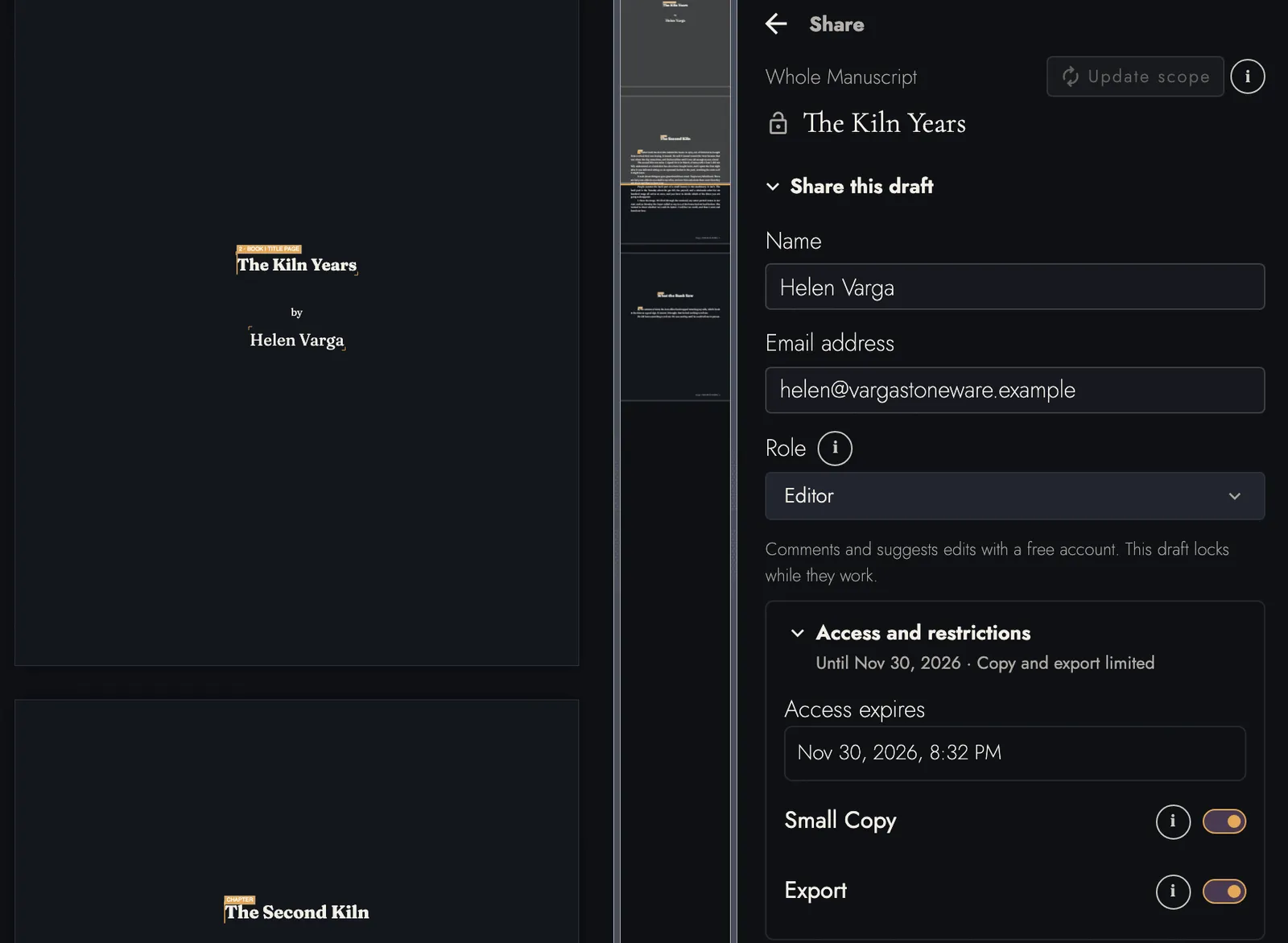
Helen corrects the page itself.
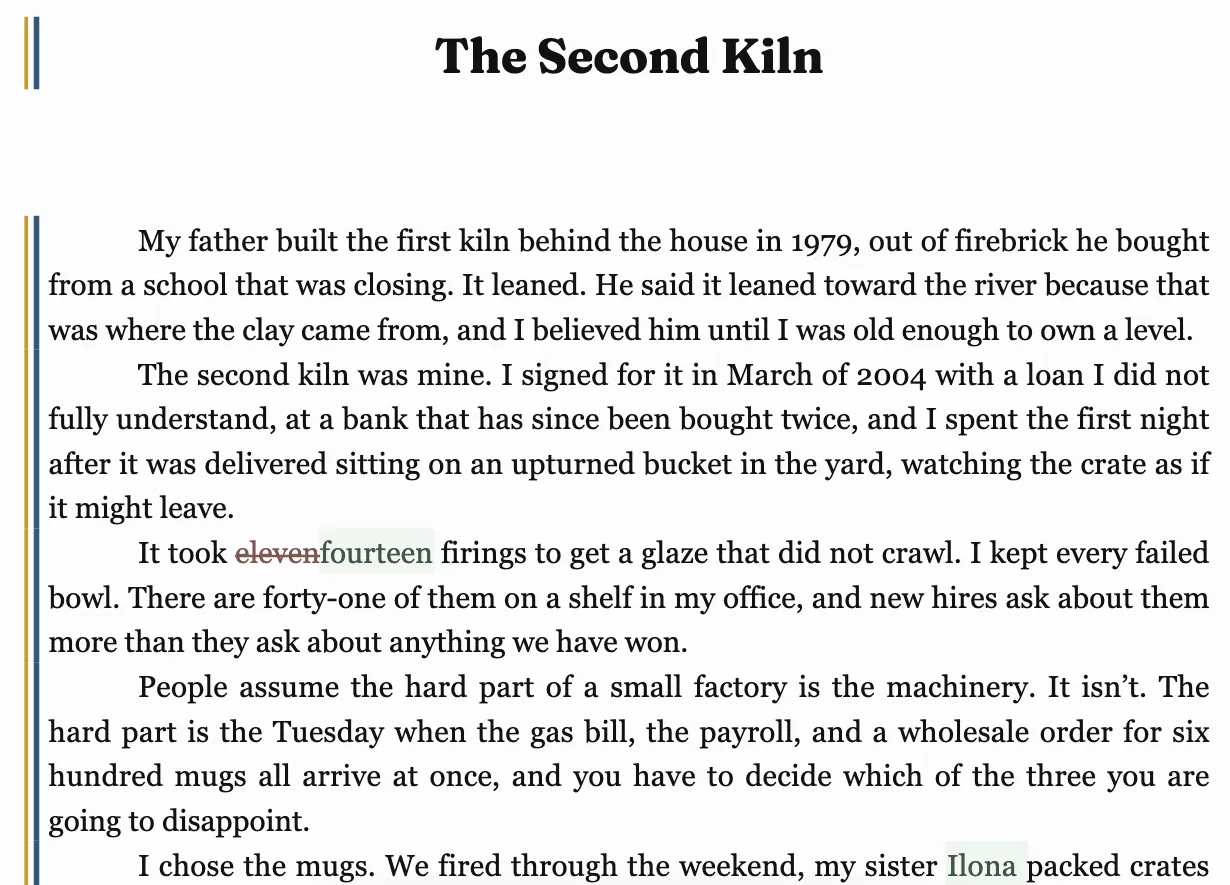
Helen catches a number Tess got wrong. It took fourteen firings to get the glaze right, not eleven, so she types the right figure over the wrong one, then adds her sister’s name a few lines down.
She is working in a copy of her own. Nothing she types reaches the manuscript until Tess says so, and when she has finished she sends the copy back with one button. Marcus does the same with a line about the bank that lent Helen the money.
Read changes in Markup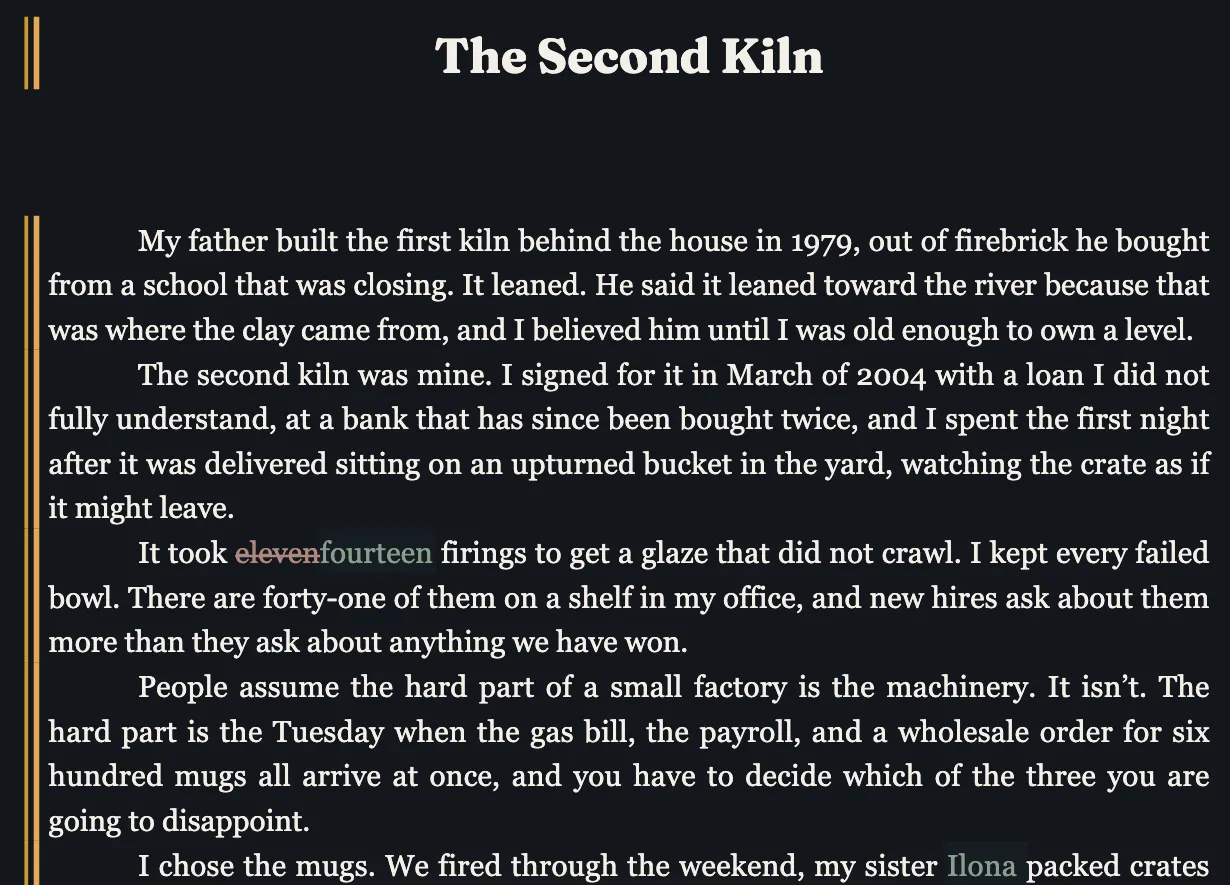
Tess takes each change, or doesn’t.
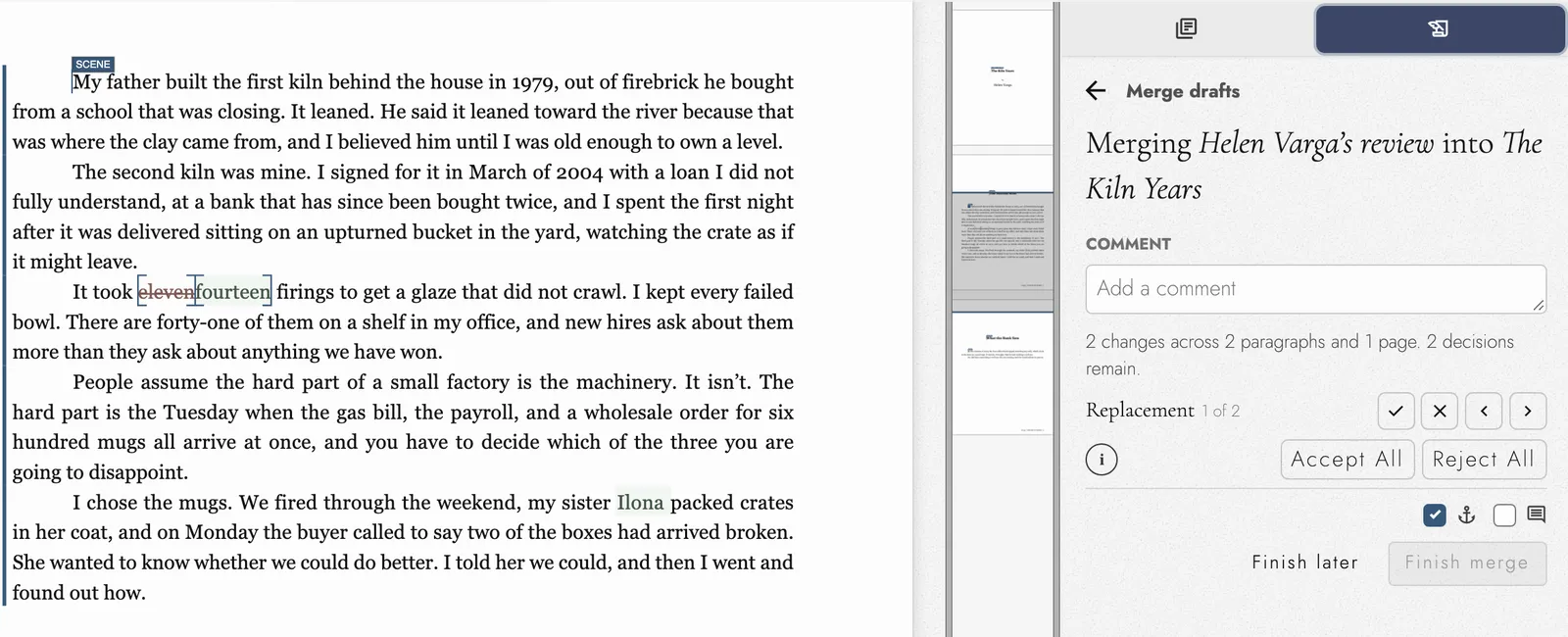
Two reviews are waiting when Tess opens the book. She starts with Helen’s, and the page shows exactly what Helen changed while Tess steps through it, accepting the corrected count and the name one at a time.
Marcus wants the bank left vague. Tess can take that, or turn it down and say why. Either way the decision is hers, made in the manuscript, rather than in a reply-all thread about the fourth version of a Word file.
Merge a returned review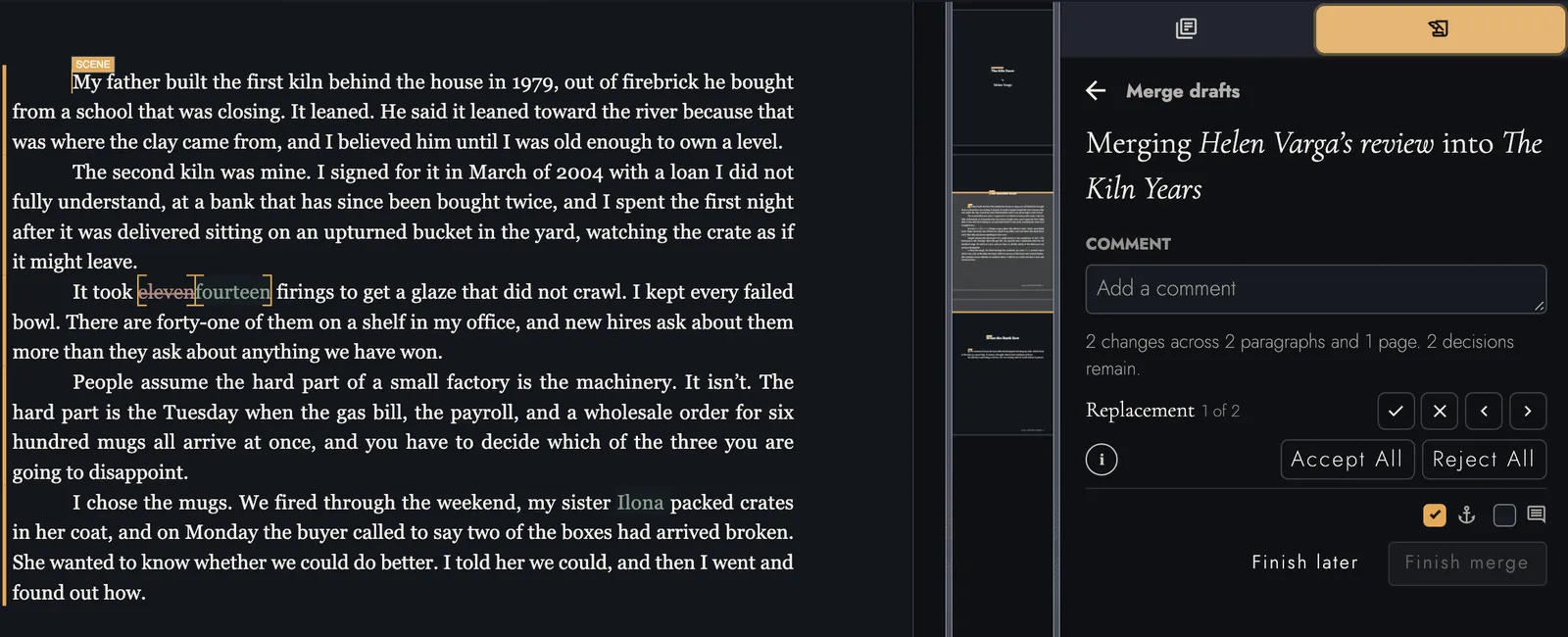
When a writer leaves halfway through
Writers move between engagements. The Kiln Years belongs to Fernhollow Books, not to Tess, so if she goes to another client the memoir stays with the firm, along with its drafts, its snapshots, and every review Helen has sent back. Whoever looks after content for the team names a new Lead Author, and the next writer picks up where Tess stopped.
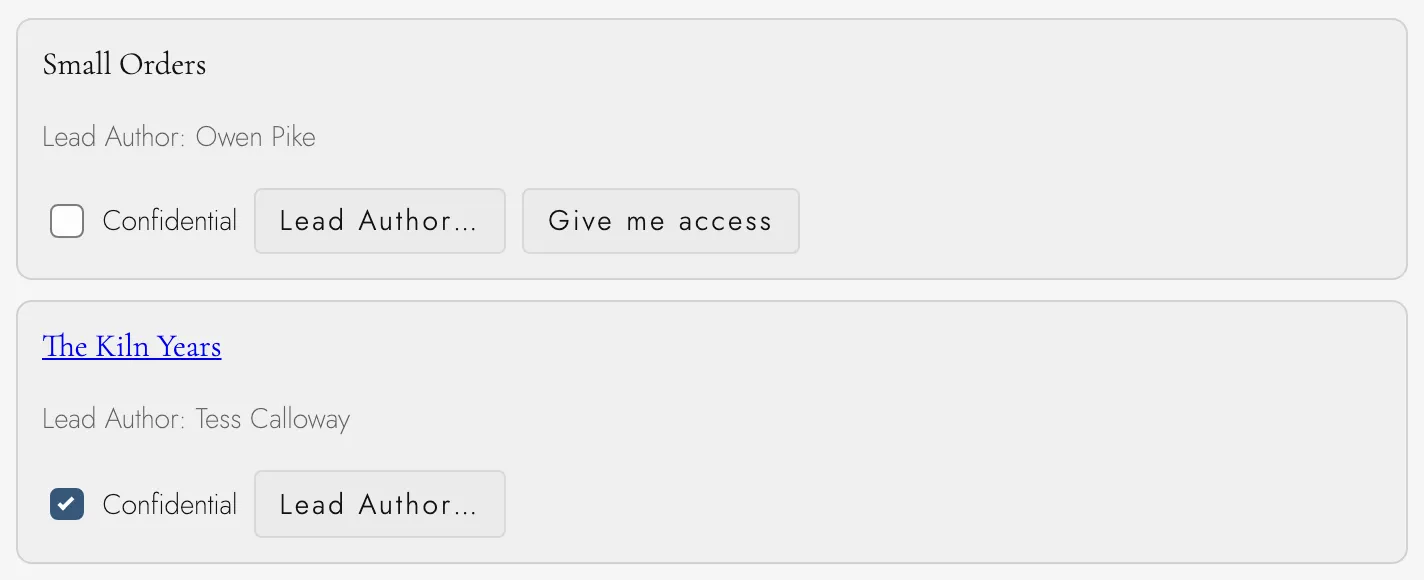
Some books are confidential inside the firm as well. Mark one confidential and the team’s default groups can’t open it, which leaves it to the people you name. Joining the team never opened every book in the first place. Who was given access, and when, goes into the team’s audit history.
Questions you’ll have
Does the client have to learn new software?
Very little. Helen needs a browser and the address you invited. She reads, types over what’s wrong, leaves a note, and sends her copy back. Accepting changes stays with your writer.
Can a CEO and their communications team both review?
Yes. Each reviewer gets an invitation and a copy of their own, and each copy comes back as its own set of proposals. Your writer reads them one reviewer at a time, so the founder’s corrections and the comms team’s caution never arrive tangled together.
What stops a reviewer from walking off with the book?
Less than you might hope, and I won’t pretend otherwise. An invitation can expire, cap copying at three paragraphs in a row, and turn export off. None of it stops a screenshot.
What happens to the manuscript when the engagement ends?
It stays in your team account until you delete it. Hand the client a Word file, or send the printer a PDF or a print-ready file, whenever you need one. How export works.
A pilot first, then seats
I’m Allen, and I built Tabularia. I set up each team by hand. Choose one memoir or executive book that’s already in client review and we’ll run it in Tabularia together for 14 days, at no charge, with the people who already work on it.
After the pilot, a seat is $35 a month on a yearly plan or $40 month to month, from 3 seats. Seats are for the people who write and edit. A client, an author, or any other outside reviewer joins as a guest and pays nothing.
Book a 20-minute walkthrough How team accounts work Every plan and price